
 Australia
 Austria
 Belgium
 China
China
 Czech Republic
 Denmark
 Estonia
 Finland
 France
 Germany
 Greece
 Hungary
 India
India
 Ireland
 Italy
Italy
 Japan
Japan
 Kazakhstan
 Latvia
 Lithuania
 Malaysia
 Netherlands
 Norway
 Poland
 Singapore
 Slovenia
 Spain
Spain
 Sweden
 Switzerland
 Thailand
 UK
UK
 Ukraine

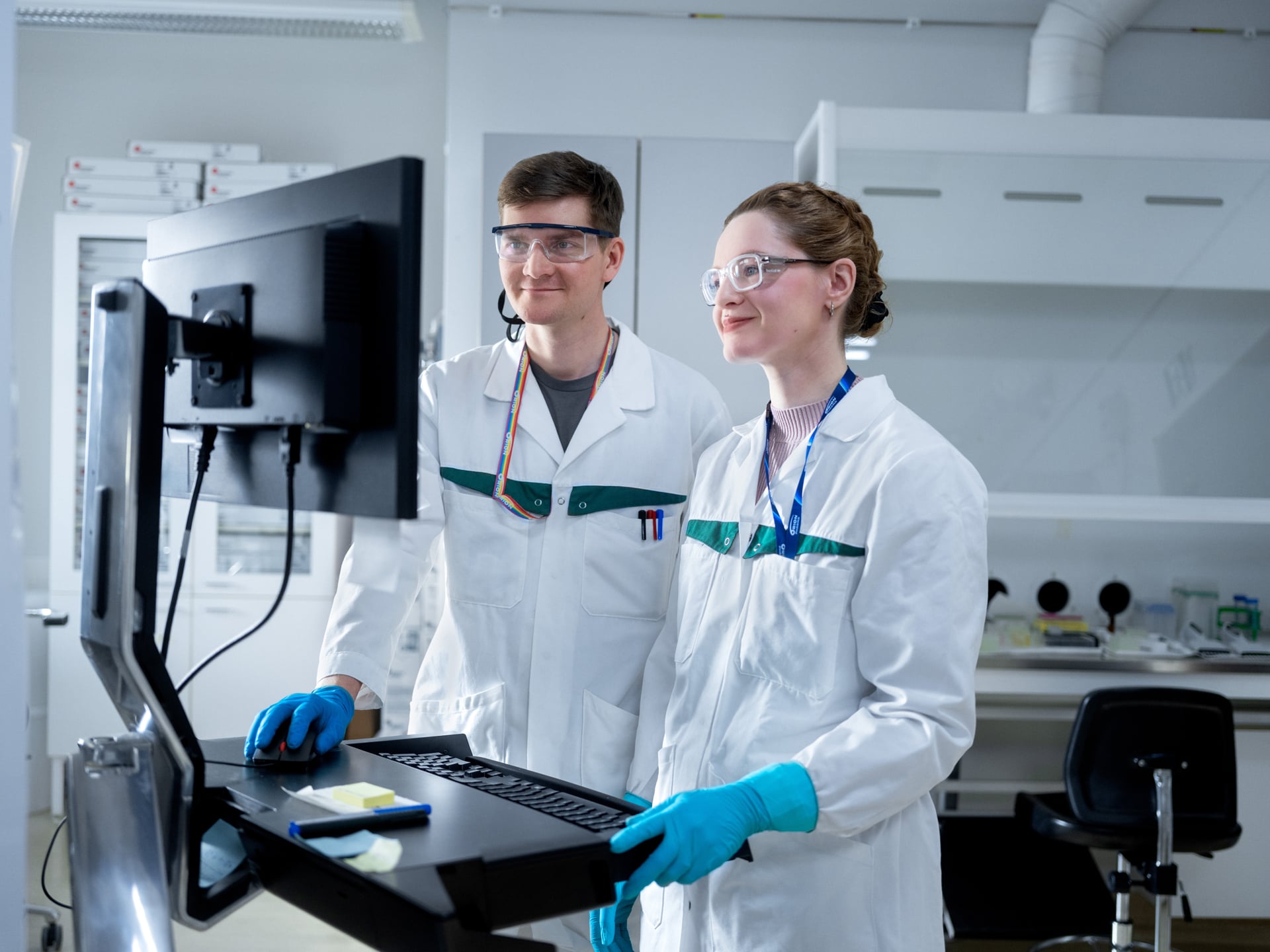



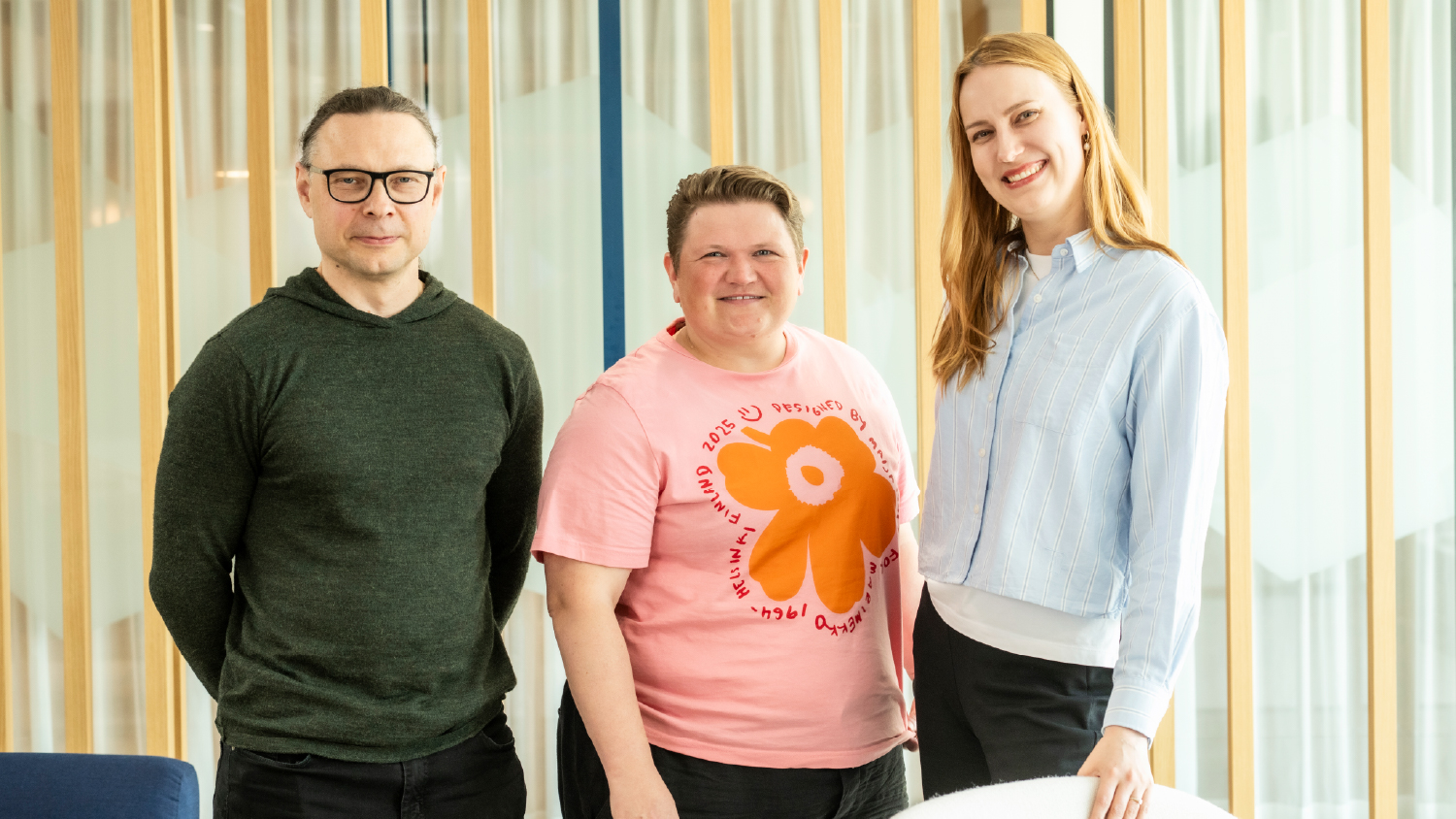
Elina Seppälä
- Senior Production Engineer
- Works in facilities services, responsible for the reliability and development of the utility systems that support production
- MSc in Chemical Engineering
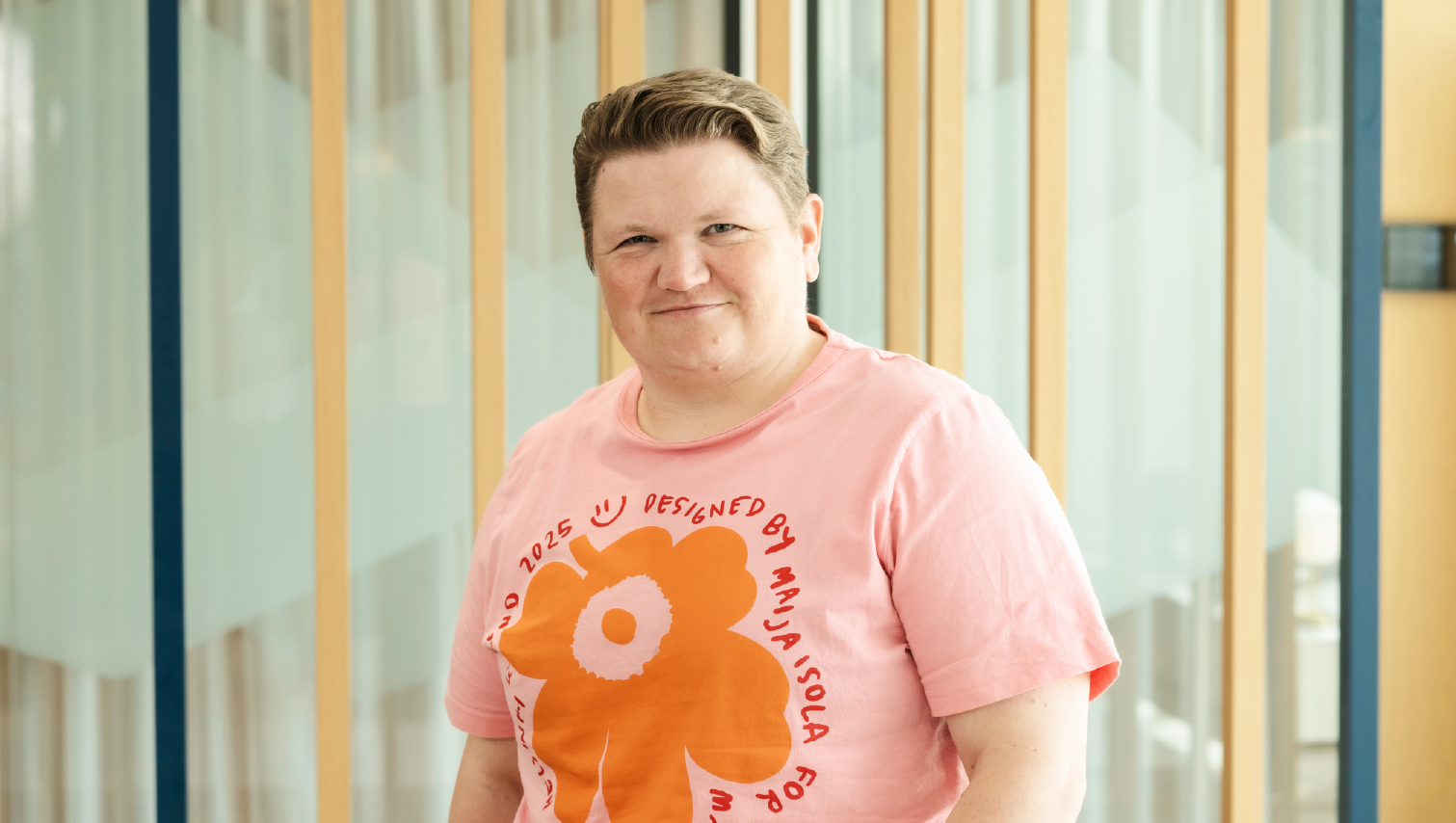
How did you get into the pharmaceutical industry?
Pretty much by accident. I was about to graduate from LUT University and was looking for work in the Helsinki area, as I played American football there.
Orion Pharma happened to have an opening for a production supervisor. I applied right at the end of the application period and got the job. Fifteen years later, I am still happy here.
What does your role at Orion Pharma involve?
Whenever water, ethanol, or compressed air is needed somewhere, I am involved in the projects that deliver it.
I make sure our utility systems work, stay up to date, and meet regulatory requirements. I also draw up long-term plans for developing them.
Part of my time goes to hands-on work in the plant, in technical spaces, and on construction sites, and part to the computer, working on reporting, planning, drawings, and various investigations.
What excites me right now is onboarding a new colleague. It is interesting to pass on the understanding and know-how gathered over the years to a younger generation.
What does your technical background bring to the role?
Above all, it has given me a certain way of thinking. I focus on facts, I am curious, and I know how to question things.
I did not enjoy the reporting side of my studies, but those skills have come in handy in this job.
Alongside technical skills, the work calls for good people skills. American football taught me how to play as part of a team, and that has helped at work too, especially when the pressure is on.
What excites you about your work right now?
Right now, I am enjoying onboarding a new colleague. When the work is already very familiar, it is interesting to stop and take stock of what you know, and to pass on the understanding and know-how gathered over the years to a younger generation.
What would you say to a technology student thinking about a career in the pharmaceutical industry?
The pharmaceutical industry has a wide range of jobs for people with a technical background. They may not be the first thing that comes to mind while you are studying, which makes them even more interesting. Give it a go!
Jussi Jalkanen
- Automation Lead
- Works in a combined managerial and specialist role in production automation
- BEng in Automation Engineering, qualified automation technician

How did you get into the pharmaceutical industry?
By chance. I had just qualified as an automation technician and was looking widely for work in the field. Orion Pharma had an opening for an instrumentation technician that matched my skills. The role interested me and I got it.
I stayed in the industry because Orion Pharma offers good opportunities to develop and to build a career. I later qualified as an automation engineer alongside work and moved on to new specialist and managerial roles in automation.
What does your role at Orion Pharma involve?
I work in production automation and lead a team of around 12 automation engineers.
Our team is responsible for maintaining and developing control systems and automation, and for keeping them reliable. We also take part in modernization and commissioning projects.
I look after the team's skills development and resourcing, which means making sure we have the capability to maintain and develop production automation. I also work as a specialist and provide technical support in various projects.
The work is mainly office-based, and my most important tools are a phone and a laptop. When needed, I still go out into the field at our different sites, and I have not forgotten how to use programming environments or a multimeter.
It pays to be curious and ready to learn – technology and automation keep moving forward.
What does your technical background bring to the role?
My education gives me a solid basis for understanding production systems and equipment. It also taught me to produce good-quality documentation.
My current role draws on many other areas as well. Cyber security, for example, has become far more important in factory automation, so understanding it matters.
I have learned a great deal on the job. In the pharmaceutical industry you must know the strict quality and documentation standards of the field, so that production systems and equipment are fit for manufacturing medicines and meet what the authorities require.
What excites you about your work right now?
Automation is developing all the time. It is interesting to be involved in building modern automation and in making production more efficient and more versatile.
Overall, it is rewarding to see how long-running projects and solutions end up supporting production in practice.
What would you say to a technology student thinking about a career in the pharmaceutical industry?
In the pharmaceutical industry you get to work with modern technology. There are plenty of varied roles, from maintenance and keeping production running to development, modernization, and equipment procurement projects.
It pays to be curious and ready to learn, because technology and automation keep moving forward. In this job you can see concretely how your own work supports production that really matters.
Lotta Wallinmaa
- Pilot Plant Manager
- Runs Fermion's pilot plant, where manufacturing processes for active pharmaceutical ingredients are tested and developed before commercial production
- MSc in Chemical Engineering

How did you get into the pharmaceutical industry?
Early in my studies I was interested in the pharmaceutical industry and water treatment as possible career options. Both felt like sensible fields connected to security of supply, where the work is meaningful and there is always demand for people who know what they are doing.
During my first year I applied for summer jobs widely and happened to land one at Orion Pharma. After the summer I carried on part time alongside my studies and eventually wrote my master's thesis for Orion Pharma as well. I have been here ever since.
What does your role at Orion Pharma involve?
I run the pilot plant in Espoo, which sits between Fermion's research and development unit and full commercial production.
We test and develop manufacturing processes for active pharmaceutical ingredients before they move into production. We also manufacture products for clinical trials.
Because it is a small unit, my job description is very broad. I'm responsible for the plant as a whole: people, safety, quality, the building, and the equipment, which in practice means everything that happens within these walls.
I work closely with the R&D teams, write and approve procedures, and plan with others how new processes can be run safely and efficiently.
My work also includes plenty of technical projects: investments, procurement, working with the maintenance team, and planning shutdowns, for example. When problems come up in production, I help solve them together with the team.
For an engineering type like me, a plant environment is fascinating. Walking through our reactor hall still makes me smile.
What does your technical background bring to the role?
It has given me a strong basis for understanding how a plant works. Knowledge of production processes, chemical engineering unit operations, and equipment technology has been very useful in this job.
I’m involved in a lot of things, so it is important to know what we are talking about. With my team I often solve exactly the kind of problems we worked on in group assignments back at university.
I also focused on financial management and project management in my studies, and both support my current management role.
What excites you about your work right now?
At the moment I’m excited about the investment projects at our own plant, where I get to be involved from start to finish. New types of active pharmaceutical ingredient and the possibilities of the technology they call for interest me enormously.
For an engineering type like me, a plant environment is fascinating. Walking through our reactor hall still makes me smile.
What would you say to a technology student thinking about a career in the pharmaceutical industry?
The pharmaceutical industry may not be the most obvious choice for technology students, and it may not even come up during your studies. It does offer a lot of interesting opportunities, though.
I have been able to do very different jobs myself, from production development and quality assurance all the way to running a plant.
Stéphanie Lecroix
- Production Manager, Arques site
- Responsible for production performance, quality, and safety at Inovet's manufacturing site in France
- MSc in Cell and Molecular Biology
How did you get into the pharmaceutical industry?
I did all my student placements at a company making medical devices for in vitro diagnostics. After graduating I was offered a job there. I built up more than 20 years of experience with them before the chance came to move to Orion Pharma's Animal Health unit.
What does your role at Orion Pharma involve?
I make sure production meets safety and quality requirements and complies with Good Manufacturing Practice. I take part in occupational safety investigations and look for ways to prevent accidents. I am also involved in regulatory inspections.
I work closely with the supply chain team to keep production on schedule and on target for volume and cost. I follow the key performance indicators, find out the reasons whenever we fall short, and correct course. I am also responsible for the budget in my area.
I put lean manufacturing methods into practice. I propose production investments and take part in selecting machinery and equipment together with the project managers.
As a manager, I lead the production teams and support my people in developing their skills.
Bringing new products into production is interesting. It opens up new prospects for the people here and for the company as a whole.
What does your background bring to the role?
My education helps me understand the products, the manufacturing processes, and the underlying biological mechanisms, as well as the technical, quality, and regulatory requirements of the pharmaceutical industry.
A scientific and systematic way of working helps with analysing information and solving problems. Alongside technical skills, the job calls for strong leadership, communication, and interpersonal skills.
What excites you about your work right now?
Right now, I am especially drawn to the challenges of production and to bringing teams and resources together so that we hit our targets on time and to the required quality. We have several working groups developing our processes across different functions. Shared goals and the team spirit that grows out of them motivate me a great deal.
Bringing new products into production is interesting too. It opens new prospects for the people here and for the company as a whole.
What would you say to a technology student thinking about a career in the pharmaceutical industry?
Scientific knowledge is essential for understanding products, processes, and regulatory requirements, but succeeding in this field also takes the ability to work with others and to adapt to constant change. It is worth developing both technical and interpersonal skills. Some grounding in leadership or project management is useful too.
The pharmaceutical industry is a challenging field, and it gives you a concrete way to help make sure safe, high-quality medicines and health products are available. I warmly recommend it!


